

Qingdao Huntsman Auto Parts LTD
Qingdao Huntsman Auto Parts LTD is Located in the beautiful seaside city Qingdao China. Which has a lot to offer historicall and economically.
Why Choose Us
Professional And Reliable
With years of experience and expertise, we have established a strong reputation for providing high-quality products at reasonable prices, while also offering customized packaging and products tailored to meet your unique needs.
Plug-And-Charge
At our company, we pride ourselves on our commitment to customer satisfaction and helping our clients succeed in their markets.
Authoritative Quality Supervision
We only work with the best and most reliable suppliers to ensure that the raw materials that we use to manufacture our products meet the highest standards.
Responsive
We will remain committed to delivering the world class service and we are the best choice for you.
-
![Chrome Valve Stems]() Chrome Valve StemsChrome Valve Stems. Model No.:TR43E. Material:Brass(copper. Eff.Length: 14x43mm. Fit rim hole 11.5/.453”. Suitable for motorcycles, motorbike, cars, trucks, bicycles and so onread more
Chrome Valve StemsChrome Valve Stems. Model No.:TR43E. Material:Brass(copper. Eff.Length: 14x43mm. Fit rim hole 11.5/.453”. Suitable for motorcycles, motorbike, cars, trucks, bicycles and so onread more -
![TUBELESS TYRE VALVE MOTORCYCLE]() TUBELESS TYRE VALVE MOTORCYCLETubeless tyre valve motorcycle. Model No.: PVR50 . Material:Natural rubber & Brass stem . Fit rim hole 11.5mm/.453'' . Package:100pcs per bag, 10 bags per carton,read more
TUBELESS TYRE VALVE MOTORCYCLETubeless tyre valve motorcycle. Model No.: PVR50 . Material:Natural rubber & Brass stem . Fit rim hole 11.5mm/.453'' . Package:100pcs per bag, 10 bags per carton,read more -
![Tubeless Valve For Motorcycle]() Tubeless Valve For MotorcycleModel No.:VS-8-45/VS-8-90. Material:Brass & Nickle plated . Certification:100% Leaking test . OEM: Acceptread more
Tubeless Valve For MotorcycleModel No.:VS-8-45/VS-8-90. Material:Brass & Nickle plated . Certification:100% Leaking test . OEM: Acceptread more -
![PVR70 Valve Stem]() PVR70 Valve StemModel No.: PVR70. Material: Brass or Aluminum alloy available. Certification: ISO9001, SGS. OEM: Acceptread more
PVR70 Valve StemModel No.: PVR70. Material: Brass or Aluminum alloy available. Certification: ISO9001, SGS. OEM: Acceptread more -
![Motorcycle Tire Valve Stems]() Motorcycle Tire Valve StemsSpecification:TR43E . Material:Aluminum . Eff. Length:14*43 mm . Color:Red, Blue,Purple,Black......read more
Motorcycle Tire Valve StemsSpecification:TR43E . Material:Aluminum . Eff. Length:14*43 mm . Color:Red, Blue,Purple,Black......read more -
![Motorcycle Tire Valve TR43E]() Motorcycle Tire Valve TR43E● Motoycle Tire Valve TR43E . ● Model No.:TR43E . ● Material:Brass(copper). ● Nickel finishread more
Motorcycle Tire Valve TR43E● Motoycle Tire Valve TR43E . ● Model No.:TR43E . ● Material:Brass(copper). ● Nickel finishread more -
![Motoycle TR161 Tyre Valve]() Motoycle TR161 Tyre Valve● Motoycle TR161 Tyre Valve . ● Model No.: TR161 . ● Material:Zinc or Brass . ● Nickel finishread more
Motoycle TR161 Tyre Valve● Motoycle TR161 Tyre Valve . ● Model No.: TR161 . ● Material:Zinc or Brass . ● Nickel finishread more -
![Motorcycle Tubeless Tyre Valve]() Motorcycle Tubeless Tyre ValveModel No.: PVR70. Material: Brass or Aluminum alloy available. Fit rim hole: .453''/11.5mm. Quality: 100% Tested. Warranty:12 Months. Car Make: motorcycle. Delivery time: 7-15 Days. Package:read more
Motorcycle Tubeless Tyre ValveModel No.: PVR70. Material: Brass or Aluminum alloy available. Fit rim hole: .453''/11.5mm. Quality: 100% Tested. Warranty:12 Months. Car Make: motorcycle. Delivery time: 7-15 Days. Package:read more -
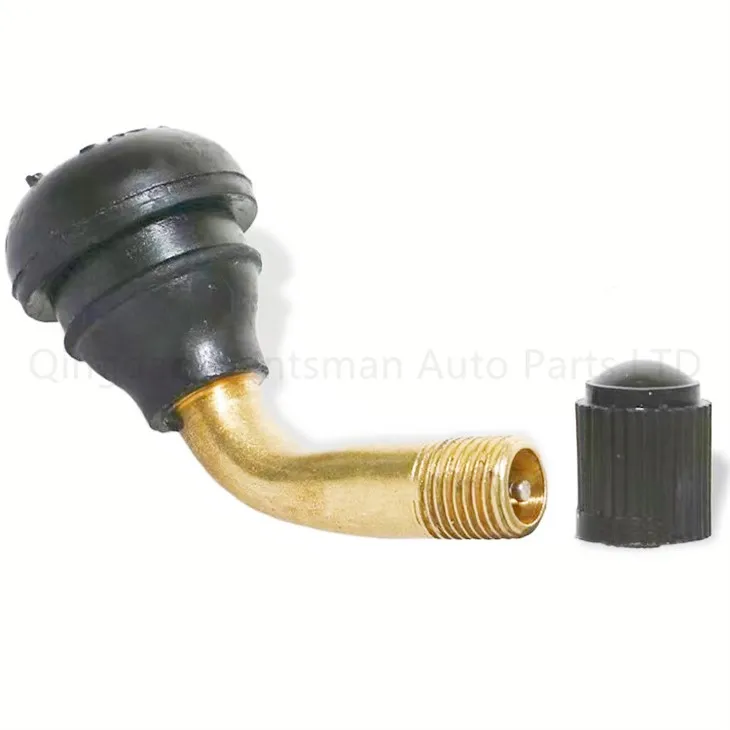
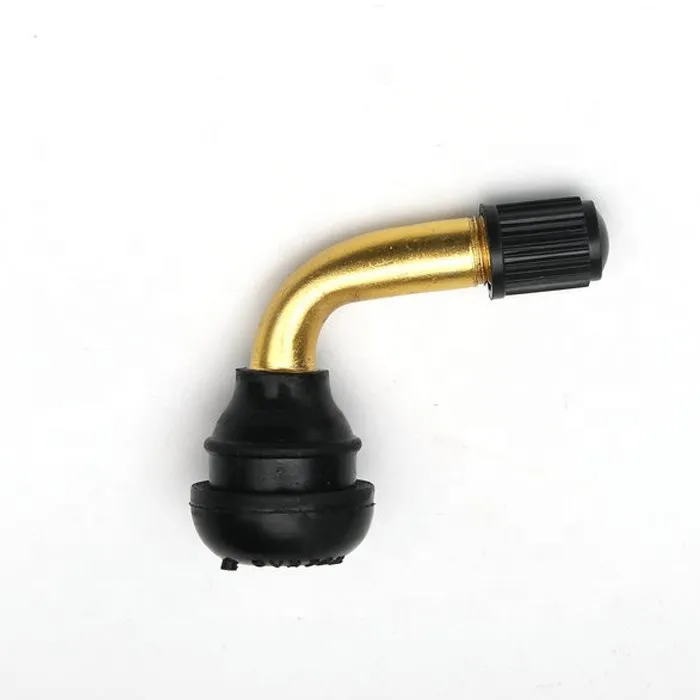
![8mm Motorcycle Valve Stem]() 8mm Motorcycle Valve Stem8mm Motorcycle Valve Stem. 90 Degree Tire Valve Stems 11.3mm or 8.3mm. Model No.: JS430M-Y. Different color availableread more
8mm Motorcycle Valve Stem8mm Motorcycle Valve Stem. 90 Degree Tire Valve Stems 11.3mm or 8.3mm. Model No.: JS430M-Y. Different color availableread more


What is Motorcycle Tyre Valve?
A motorcycle tire valve is a part of a tubeless tire that allows air to flow in and out, and keeps the tire sealed to prevent air from escaping. Valves are used to inject air into the tire to reach the correct pressure. Over time, valves can wear out due to regular use.
Types of Motorcycle Tyre Valve
There are different types of motorcycle tire valves, including Presta and Schrader valves:
Presta valves
Have a wide rubber base and a removable core. To install, push the valve through the rim from the inside and screw down the knurled ring on the valve stem to secure it.
Schrader valves
Also known as American valves, these are the same type of valve used on most motor vehicles and are compatible with service station compressors.
Over time, motorcycle tire valves can wear out from regular use and may become clogged with sealant. It's important to remove the valve core before repairing a tire, especially if it's been repaired with an aerosol product, to remove any remaining propellent.
Schrader and Presta valves explained


Modern bicycle tires are pneumatic tires, meaning that they are inflated with air to a moderate or high pressure. In almost all cases today, bicycle tires either use innertubes (an internal air bladder), or are "tubeless" in which case the tire is inflated directly with no internal bladder. In either case, the tire (or innertube) will have a valve through which it is inflated. There are two distinct types of valves in use, and each works differently. The two types of valves are known as "Schrader" and "Presta". Schrader valves are sometimes called "American valves", and Presta valves are sometimes called "French valves". Schrader valves are the same valve that are found on all automobile tires, and they are also found on bicycle innertubes. Presta valves are typically only used on bicycle innertubes or tubeless wheels.
Schrader and Presta valves each use a different fitting for the "air chuck" that connects to the valve for inflation. Some bicycle pumps have an air chuck that is capable of fitting either type of valve, and some have a double-headed air chuck with a Presta fitting on one side, and a Schrader fitting on the other side. Many pumps have an air chuck that is capable of fitting one or the other, but not both. The air compressors found at gasoline stations have an air chuck that fits Schrader valves, and an adapter is required to go in between if a tire using a Presta valve is to be inflated using a gasoline station air compressor.
Physical Differences
The most obvious difference between Schrader and Presta valves is the diameter of the valve stem. Presta valves have a noticeably narrower valve stem at 6 mm wide, compared to Schrader valves which are 8 mm wide. Presta valves come in various valve stem lengths commonly ranging from 48 mm to 80 mm whereas Schrader valves are generally limited to one standard valve stem length.
Presta valves have a small captive nut on the very top that must be unscrewed to open the valve (for inflation or deflation), and must be screwed shut to close the valve. Once inflated, the air pressure inside the innertube (or tubeless tire) holds the Presta valve shut. Schrader valves have no such manual open and close mechanism, and instead use a spring-loaded poppet valve, which when depressed ag against the spring opens the valve for inflation or deflation, and when not depressed, the internal spring closes the valve.
Operational Differences
Inflating innertubes and/or tubeless tires equipped with Presta and Schrader valves is similar, but has noticeable differences that must be observed.
Presta Valve Inflation Procedure:
Remove (unscrew) the valve cap (if present)
Fully unscrew the valve's captive top nut to open the valve
Attach air chuck from pump (or attach CO2 inflator)
Inflate to desired air pressure
Remove air chuck from pump (or detach CO2 inflator)
Fully screw closed the captive top nut to close the valve
Replace (screw on) the valve cap (if present)
Presta Valve Deflation Procedure:
Remove (unscrew) the valve cap (if present)
Fully unscrew the valve's captive top nut to open the valve
Manually depress the valve straight downward by pressing downward on the very top
Deflate to desired air pressure
Fully screw closed the captive top nut to close the valve
Replace (screw on) the valve cap (if present)
Schrader Valve Inflation Procedure:
Remove (unscrew) the valve cap (if not present, obtain a replacement at first opportunity)
Attach air chuck from pump (or attach CO2 inflator)
Inflate to desired air pressure
Remove air chuck from pump (or detach CO2inflator)
Replace (screw on) the valve cap (if not present, obtain a replacement at first opportunity)
Schrader Valve Deflation Procedure:
Remove (unscrew) the valve cap (if not present, obtain a replacement at first opportunity
Using a pointed object or tool, manually depress the valve's center button located in the center of the valve stem opening
Deflate to desired air pressure
Replace (screw on) the valve cap (if not present, obtain a replacement at first opportunity)
The main benefit of metal valves is that you can buy them in 90-degree versions. You can fit either 11.3mm 90-degree metal valves (for newer Japanese motorcycle, mainly) or 8.3mm 90-degree valves, (for European motorcycle, mainly).
The fact they have the valve head at 90-degrees to the rim makes them much easier get at when checking and adjusting your motorcycle's tyre pressures. As anyone who's burnt the back of their hand on a front brake disc can tell you; it's tricky to get at a regular valve. And you won't forget that burn in a hurry!
The other benefit of metal valves over the rubber ones is that they will last pretty much as long as your motorcycle. We know of valves we've supplied that are still in action and holding perfect pressure a decade on and there's no reason they won't last longer than 10 years.
You can also buy screw-on 90-degree valve adapter that fit onto a regular rubber valve but these have to be removed before you ride the motorcycle, making them a bit more hassle than they're worth.
Metal valves are slightly heavier than rubber valves but only by a few grams. They won't know the balance of your wheel out and, obviously, when you fit new tyres, the fitter will balance the wheel properly, regardless of the type of valve.
But for us, the real advantage is the ease of access, which means you're far more likely to check your pressures which in turn means you'll be safer and get better mileage from your motorcycle tyre.
Motorbike Tyre Pressure Safety Guide & Tips
What Is The ‘Right' Motorcycle Tyre Pressure?
Street motorbike tyre pressure amounts usually sit within the psi range of 28 to 40. Sport riding utilises the lower setting on the manufacturer placard, while commuter riding sits around the higher setting. These rules typically apply to sports/road motorcycles.
We advise a general setting of 32 psi front and rear for maximum grip and sporty riding, or 40 psi front and 42 psi rear for maximum longevity.
Why Is It Important To Check My Tyres' Air Pressure?
Under-pressurised tyres run hot, affecting the compound and accelerating wear. If you ride on tyres lower than the recommended pressure, the performance and handling of your bike will be negatively affected, and things will get dangerous in certain conditions. Over-inflating creates a hard ride and also accelerates wear in the centre contact patch of the tyre.
The primary benefits of maintaining the correct motorbike tyre pressure include:
Saving Money: Tyre repairs or, even worse, bike repairs due to an unnecessary accident are costly; minimise this risk by riding on the right tyre pressure.
Riding Confidence: You'll be more confident on the road or track with tyres that perform as they should and a bike that handles comfortably.
Safer Operation: When you have more control over your bike, you can operate more safely, especially at high speeds.
Can Prevent Tyre Wear: Get the longevity you should from your tyres by keeping them pressurised correctly.
More Comfortable Ride: Everyone loves a smooth ride, and correctly pressurised tyres are the key to achieving this.
How do I check my Tyres' Air Pressure?
Always check your tyre pressure when your tyres are cold, as the pressure can increase when your tyres heat up. To check your pressure, follow these steps:
Locate the valve stem, which should be on the inner surface of your wheel's rim
Take the cap off and ensure the opened section is clean
Make sure your pressure gauge is set to zero, then line it up over the valve's end and press down
There should be no sounds of escaping air; if there are, your gauge is not set correctly
Check the pressure on the gauge and adjust accordingly, repeating these steps to confirm you have the right amount in the tyre
Tyre Air Pressure Recommendations & Tips
In most cases, you will be inflating your tyres with standard air - which is fine - but it is important to note that an irregular mix of atmospheric gases and temperatures can fluctuate greatly in the tyre, affecting its pressure depending on weather conditions.
An alternative that avoids this issue is pure nitrogen gas inflation, which as an inert gas, is far more stable and less likely to vary its pressure in different weather conditions. This helps to increase your tyre's lifespan and prolong grip quality (the more a tyre heats up, the greater the tyre fatigue, which eventually results in a loss of grip).
Tubed vs Tubeless Motorcycle Tires - Differences and Advantages
What's the difference between tubed vs tubeless motorcycle tires, and which one should you go for? Is it possible to put a tube in a tubeless tire, or, conversely, change a tubed tire into a tubeless one? Figuring out which tire type is best for you can be confusing, especially as there are so many different options out there.
Tubed Motorcycle Tires
Tubed motorcycle tires have been around for ages, and while cars have long abandoned tubes, many motorcycles still run them. The reason for this is spokes. Spokes make it challenging to air seal the space between the rim and the tire, and that's where the tube comes in: it holds the air between the rim and the tire.
Essentially, a tubed motorcycle tire has two components: a tough and sturdy tire and a soft inner tube to hold the air and give the tire its shape. The stem valve is attached to the tube itself, and where tubed motorcycles truly shine is off-road performance. Tubed tires are mostly used for enduro, motocross, dirt, and most adventure and dual-sport motorcycles. This is because spoked wheels absorb the shocks of rough terrain, jumps, rocks, and drops better than cast wheels.
However, some motorcycle wheels are now made with spokes attached to the side of the rim (so-called cross-spoked rims) rather than laced in, which makes it possible to have the wheel airtight. Lots of adventure bikes come with airtight spoke nipple seals; in other words, it's possible to run tubeless tires with modern spoked-wheel bikes - but tubed tires have their advantages. Largely, however, motorcycles with spoked wheels will need to be run with tubes – and there are advantages and disadvantages that come with it.
Types of Tubed Tires
There are two types of tubed motorcycle tires now: those with traditional tubes and those with mousses. Traditional tubes come in different thicknesses: 1.5mm, 2mm, 3mm, and 4mm, and the type of tube you'll need depends on the kind of riding you do. For road bikes, heavy-duty tubes aren't necessary as punctures on the tarmac are a rare occurrence, and running heavy tubes at high speeds might overheat them. For off-road riding, especially on rougher terrain, heavy-duty or ultra-heavy-duty tubes are better for increased puncture resistance.
Then, you have bib mousse inserts. Mousses are solid-core foam inserts, and they're designed for motocross, enduro, and rally racing. It's near impossible to have a flat mousse as the foam retains its shape when it's punctured, which is why mousses such as Nitromousse are getting increasingly popular among off-road and even adventure riders. The only downside of a mousse is that you can't run them at high speeds, which makes them overheat.
Pros and Cons of Tubed Motorcycle Tires
When it comes to a tube tire vs tubeless, the main advantage is durability and resilience off-road. This, once again, comes down to spoked wheels that can take severe abuse on hard terrain, as well as withstand jumps, jolts, log-hopping, and all the other rough stuff off-road riders tend to do on their bikes.
The main drawback of tubed tires is the punctures. Once you've got a flat, you need to remove the tire, take out the tube, and patch it or replace it if it's badly torn. When you're out on the trails facing scorching midday sun and no shade to hide under, this isn't exactly fun. Additionally, tubed motorcycle tires tend to be heavier and have a shorter lifespan.
That being said, most off-road riders will still prefer the tubed tire or experiment with mousses, especially in a competition setting or on longer trips.
Tubeless Motorcycle Tires
Tubeless motorcycle tires have become increasingly popular for years now due to more and more motorcycles being made with cast wheels. A cast wheel can be made airtight, eliminating the need for a tube altogether. Unlike with tubes, the stem valve is not part of the tire but rather, attached to the rim, which means the space between the wheel and tire can be sealed perfectly.
Tubeless motorcycle tires are thicker to withstand punctures, and if the tire catches a nail, the material seals itself along the object to keep the tire airtight.
Pros And Cons Of Tubeless Tires
Tubeless tires last longer and are significantly less prone to punctures. Unless the puncture is in the sidewall, all you need to do is plug the puncture using a simple plug kit instead of removing the wheel and the tire to repair it. What's more, if you have a small puncture on a tubeless tire, it will lose air gradually – which is a lot less dangerous than getting a sudden flat tire when you're traveling at speeds.
Tubeless tires also run cooler, which prolongs their lifespan, and are typically lighter than tubed tires.
Our Factory
At our company, we pride ourselves on our commitment to customer satisfaction and helping our clients succeed in their markets. We work closely with well-known brands to ensure they receive the best products and service available. Our aim is to provide a seamless, hassle-free shopping experience that saves you time and money.Our products range from tire patches, valve stems, repair tools, wheel weights, tire changers, balancers, and many more. We are constantly expanding our product range to meet the ever-changing needs of the industry, and to offer a comprehensive solution to our clients.


FAQ
We're well-known as one of the leading motorcycle tyre valve manufacturers and suppliers in China. Our factory offers high quality motorcycle tyre valve made in China with competitive price. Welcome to contact us for wholesale service.
Motorcycle Tubeless Tyre Valve vendor, 8mm Motorcycle Valve Stem vendor, Motorcycle Tubeless Tyre Valve